What do Jehovah’s Witnesses learn about reinstatement committees?
Among Jehovah’s Witnesses, reinstatement committees are used to evaluate whether a disfellowshipped person (or one who has resigned) has shown sufficient repentance to be reinstated in the congregation. According to Shepherd the Flock of God1, the purpose of such committees is to ensure that the person has sincerely repented and is living in harmony with Bible principles. Therefore, the reinstatement committee must interview the disfellowshipped person to determine whether he or she is repentant and otherwise has a lifestyle in line with the teachings of Jehovah’s Witnesses.
What does the Bible teach?
The Bible emphasizes personal repentance and God’s mercy, without mentioning formal processes or selections. The parable of the prodigal son illustrates this point (Luke 15:11-32). Here, the son returns to his father in repentance, and the father accepts him immediately. There are no signs that others are evaluating his son’s repentance, having a meeting with him to assess whether he can return, nor a checklist to investigate whether he now qualifies. The New World Translation states: “If your brother commits a sin, rebuke him, and if he repents, forgive him” (Luke 17:3). Verse 4 adds: “you must forgive him” (Luke 17:4). The passage does not describe any formal review of whether the repentance is sufficient. Only Jehovah can read hearts, so only He can judge a person’s repentance (1 Kings 8:39; 1 Samuel 16:7).
Also in Isaiah 1:18, God encourages repentance, saying, “Come, now, and let us set matters straight between us,” says Jehovah.
“Though your sins are like scarlet, They will be made as white as snow” (Isaiah 1:18). This emphasizes that God’s forgiveness is available without human intermediaries. Humans are incapable of assessing the repentance of others. In 1 Samuel 16:7, it says: “… mere man sees what appears to the eyes, but Jehovah sees into the heart”. No human being can really judge another person’s heart condition, since regret is a state of thought.
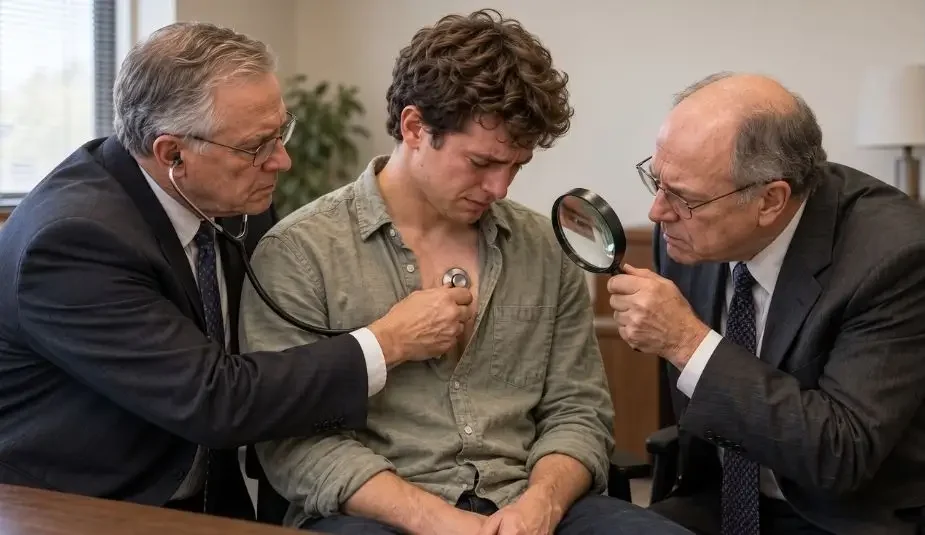
This makes it unrealistic and potentially dangerous for elders to attempt to assess a person’s repentance. For an example of the consequences this can have, see the article Registration of Marriage and Divorce, which describes a woman whose unregistered marriage prevented her from being reinstated. The Bible emphasizes that forgiveness and restitution are based on God’s mercy, not on human judgments (Psalm 103:8-12). This challenge makes the assessment of repentance for retrial far more serious than disfellowshipping as a result of a reinstatement committee. While reinstatement committees consider obvious acts, the assessment of repentance requires insight into the heart, which is reserved for God alone. Attributing such a role to humans can lead to erroneous decisions that damage the integrity of the Christian faith.
The use of reinstatement committees leads to an unnecessary barrier for those who want to return to the church. This creates a sense of rejection and makes the process heavier than the Bible suggests, just as the Pharisees placed heavy burdens on people (Luke 11:46). When forgiveness and restitution are conditioned on organizational considerations, it can also overshadow God’s grace and mercy. Elders thus come between Jehovah and the individual in the exercise of faith, although Paul wrote: “Not that we are the masters over your faith” (2 Corinthians 1:24; see also Romans 14:4, 12). Only Jesus is the mediator between God and men, not the elders (1 Timothy 2:5).
- Shepherd the Flock of God constitute the elders’ procedural and material regulations for reinstatement. ↩︎
Don’t miss this related study ↓
🔗 The teaching method of Jehovah’s Witnesses